


How to Book Real Estate Media Efficiently

A listing is ready, the seller wants it live tomorrow, and three different vendors need three different emails before anything gets on the calendar. That is usually where time gets wasted. If you want to know how to book real estate media efficiently, the answer is not just booking faster. It is building a repeatable process that reduces back-and-forth, avoids missed assets, and gets the property marketed without delays.
For most agents and property marketers, the booking itself is not the hard part. The friction comes from unclear scope, missing access details, add-ons decided too late, and vendors who treat every shoot like a custom event instead of a professional listing workflow. Efficient booking starts before you ever pick a time slot.
What efficient booking actually looks like
Efficient booking means the right media gets scheduled in one pass, the property is properly prepared, access is confirmed, and the final assets match the listing plan. It also means fewer revision requests, fewer follow-up calls, and less waiting around for pieces that should have been ordered together from the start.
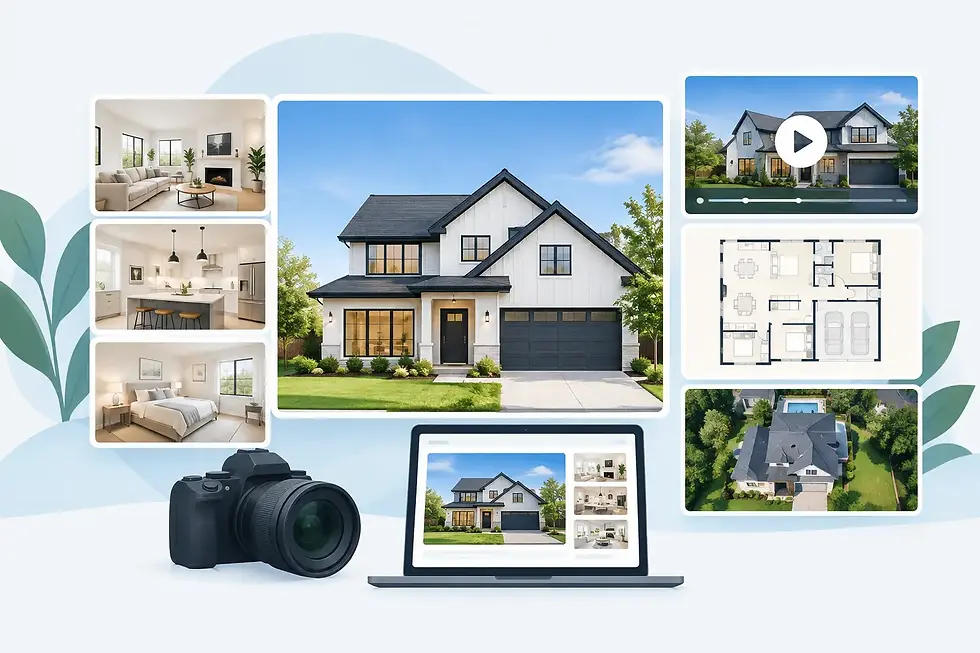
That matters because real estate media is rarely just one item anymore. Photos may be the baseline, but many listings also need video, drone coverage, a 3D tour, floor plans, and social-ready formats. If those pieces are booked separately or added one by one, your timeline stretches and the property can miss its best launch window.
A good booking process should feel operational, not complicated. You should know what to select, what to send, and what you will receive.
How to book real estate media efficiently from the start
The fastest bookings happen when you decide the marketing scope before opening the calendar. That means knowing what the listing actually needs based on property type, price point, location, and campaign goals.
A standard occupied condo may only need strong photography, a floor plan, and a property website. A larger home with view exposure may justify drone photo and video. A luxury or architecturally distinct listing may benefit from cinematic walkthrough video and a 3D tour. A commercial space might need broader coverage focused on layout, access, and leasing context.
The trade-off is simple. Under-booking saves money upfront but can create delays later when you realize the listing needs more. Over-booking can add assets you do not truly need. The efficient middle ground is choosing media based on how the property will be marketed, not just what sounds useful in theory.
Once that is clear, book the full package at the same time whenever possible. Bundling services into one appointment is usually the cleanest way to reduce coordination and keep the launch on schedule.
Start with the end use, not the shoot itself
Before booking, ask one practical question: where will these assets be used in the first 72 hours after delivery?
If the answer includes MLS, listing sites, email marketing, Instagram Reels, paid social, and a property website, then your order should reflect that reality. You do not want to receive beautiful horizontal video only to realize you also needed vertical clips. You do not want to launch photos first and schedule floor plans later if buyers are already asking about layout.
Booking becomes more efficient when you think like a marketer, not just a scheduler.
Choose one production partner when possible
Working with multiple specialists can make sense in certain high-end or highly customized campaigns. But for day-to-day listing volume, one end-to-end media partner is often the more efficient option.
That approach reduces duplicate appointments, conflicting timelines, and inconsistent visual quality across assets. It also simplifies communication. One order, one confirmation process, one shoot day, and one delivery pipeline is easier to manage than piecing together separate vendors for photos, video, drone work, and floor plans.
For busy agents, that operational simplicity is often the real value.
The details that speed up scheduling
Most booking delays come from incomplete information. If you want faster confirmation and a smoother shoot, send all critical details at the time of booking instead of waiting for follow-up questions.
The most useful information is straightforward: property address, square footage, property type, occupancy status, preferred shoot window, gate or lockbox instructions, contact on site, and any community or drone restrictions. If the property has standout features that should be prioritized, mention those too.
This is especially important for larger homes, commercial sites, and properties with limited access windows. The more variables involved, the more useful it is to remove uncertainty early.
How to avoid rebooking and missed add-ons
One of the biggest inefficiencies in real estate media is the second appointment that could have been avoided. It usually happens because the order was too narrow at the start or because someone made a late decision after the first assets came in.
If a listing is likely to need drone coverage, book it upfront. If a 3D tour helps qualify serious buyers or supports out-of-area interest, decide before shoot day. If floor plans help answer layout questions quickly, do not treat them as an afterthought.
There are exceptions. Not every rental turn or entry-level listing needs the full set. But if you are already leaning toward an add-on, it is usually more efficient to include it in the original booking than to coordinate another visit later.
Match the package to the property timeline
Vacant listings, tenant-occupied units, and active homes all require different booking logic.
Vacant properties are the easiest to schedule because access is flexible and prep is more predictable. Occupied homes need tighter communication with sellers, cleaners, stagers, and sometimes pets or children in the mix. Tenant-occupied rentals often have the narrowest window of all, which makes complete booking even more important.
If access will be difficult, choose a package that covers all likely needs in one visit. That is where efficient planning saves the most time.
Prep is part of booking
A fast booking can still lead to a slow launch if the home is not ready. The shoot day should not be the first time anyone thinks about blinds, countertops, landscaping, or whether a car needs to be moved from the driveway.
Efficient booking includes a clear prep expectation. Sellers, occupants, or site managers should know exactly what needs to be ready before the photographer arrives. That may include decluttering surfaces, turning on lights, opening shades, hiding cords, removing trash bins, securing pets, and making sure every key area is accessible.
This is where a dependable media partner helps. The best systems do not just confirm a time. They make the process easier by setting expectations early and clearly.
Turnaround time matters more than most people admit
Booking efficiently is not only about getting on the calendar. It is also about receiving usable assets when you actually need them.
A shoot scheduled quickly but delivered too slowly still creates drag in your listing workflow. If your goal is to go live fast, turnaround should be part of the booking decision from the beginning. For many agents, next-morning photo delivery is not a luxury. It is what keeps the marketing timeline intact.
The same goes for file organization and delivery format. Assets should arrive ready for use, not as a pile of mismatched files that need sorting before upload.
Build a repeatable booking system for every listing
The most efficient agents do not reinvent this process each time. They use the same checklist, ask the same pre-booking questions, and work with a partner built for recurring listing volume.
That system might be as simple as deciding your default package tiers by listing type, keeping property access details in one place, and confirming seller prep as soon as the appointment is booked. If your team handles multiple listings at once, standardization matters even more.
This is where a company like Benson Productions fits naturally into the workflow. When booking, shooting, and delivery are designed around real estate timelines instead of one-off production logic, the process gets easier to repeat at scale.
A few situations where it depends
Not every property should be booked the same way. A small lease listing on a tight timeline may need speed over breadth. A custom home may justify more extensive coverage and a slightly longer shoot window. Weather can affect drone scheduling. Occupancy can limit how much can be captured in one session.
Efficiency is not about forcing every listing into the same package. It is about knowing what to standardize and what to adjust. The more experienced your process is, the easier those decisions become.
The best booking systems do one simple thing well: they help you get the right media, in the right order, at the right time, without creating extra work for everyone involved. That is how listings go live faster, look more complete, and stay on track when the schedule is tight.


My Year 9s asked what the inside of a Bedouin tent looks like.
Generated something passable in 30 seconds with an AI panorama generator and threw it on the smartboard. Not for the IB curriculum but great as an icebreaker.