



Real Estate Photography Requirements Explained

A listing can be ready to launch, priced right, and in a strong location - then lose momentum because the visuals were handled like an afterthought. That is why real estate photography requirements matter. They are not just about getting a few good-looking shots. They affect MLS compliance, buyer perception, marketing speed, and how professionally a property shows up across every channel.
For agents, brokerages, and property marketers, the goal is simple: get clean, accurate, listing-ready media without delays or revision headaches. The challenge is that "requirements" can mean different things depending on whether you are talking about MLS rules, property prep, image quality, drone compliance, or delivery formats. The details matter because the media package has to work in the real listing workflow, not just look good in a portfolio.
What real estate photography requirements actually include
When people ask about real estate photography requirements, they are usually referring to a mix of standards rather than one fixed checklist. Some of those standards come from the listing platform. Others come from the brokerage, the property type, or the way the media will be used after the listing goes live.
At the most basic level, the requirements usually cover image quality, composition, lighting, file readiness, and accurate representation of the property. Photos need to be sharp, bright, and professionally edited, but still realistic. Over-editing can create problems just as easily as poor lighting can. If a room looks materially different in person than it did online, that can hurt trust and create friction during showings.
There is also a practical side. Agents often need images that are ready for MLS, marketing flyers, property websites, email campaigns, and social media. That means the photography team should deliver files in usable formats and ratios, with a shot count that covers the property without leaving obvious gaps.
MLS and listing platform expectations
One of the most important real estate photography requirements is meeting MLS standards. These rules vary by market, but the broad expectations are consistent: images must be clear, professional, and compliant with platform restrictions.
In most cases, MLS photos should avoid excessive branding, contact information, promotional text, or graphic overlays on the image itself. An agent might want to add a headline or logo for social media, but that version is usually not the one that belongs in the MLS. This is where organized delivery helps. It is useful to have clean, MLS-ready files separated from branded marketing assets so nothing gets uploaded in the wrong place.
Accuracy also matters. Editing should improve the presentation of the property, not misrepresent it. Removing a temporary blemish or correcting color is normal. Changing structural features, hiding permanent defects, or making outdoor views look dramatically different than reality is where things get risky. Good real estate media should help a property show at its best while staying honest.
Property prep is part of the requirements
Some of the biggest photography issues happen before the camera ever comes out. A home can have excellent design and still photograph poorly if it is cluttered, poorly lit, or not ready room to room. That makes property prep one of the most overlooked requirements in the process.
For residential listings, that usually means cleared countertops, made beds, open window treatments where appropriate, lights functioning properly, and personal items minimized. Commercial spaces have their own version of this. The site may need to be cleaned, signage reviewed, desks organized, and areas coordinated for access before the shoot starts.
This is where timing matters. If the property is still being painted, cleaned, staged, or repaired, the shoot may technically happen on schedule but still fail to produce listing-ready media. In a fast-moving market, that can cost more than simply pushing the appointment by a day and getting it done right.
Image quality requirements that affect results
Professional real estate photography is expected to do a few things at once. It needs to show space clearly, keep vertical lines straight, control interior and exterior exposure, and make each room feel useful and connected to the rest of the property.
Wide-angle coverage is standard, but there is a line between showing enough of the room and making spaces look distorted. If a bathroom looks twice as large in photos as it does in person, that is not good marketing. It sets the wrong expectation. Clean composition and natural perspective usually outperform gimmicky angles because they help buyers understand the property faster.
Lighting is another major requirement. Interior photography often requires balancing window light with room exposure so the space feels bright without blowing out exterior views. Twilight shots, luxury finishes, and mixed lighting conditions can raise the complexity. That does not always mean every listing needs the same treatment. A standard tract home, a luxury estate, and a commercial suite often need different coverage strategies.
Real estate photography requirements for video, drone, and 3D tours
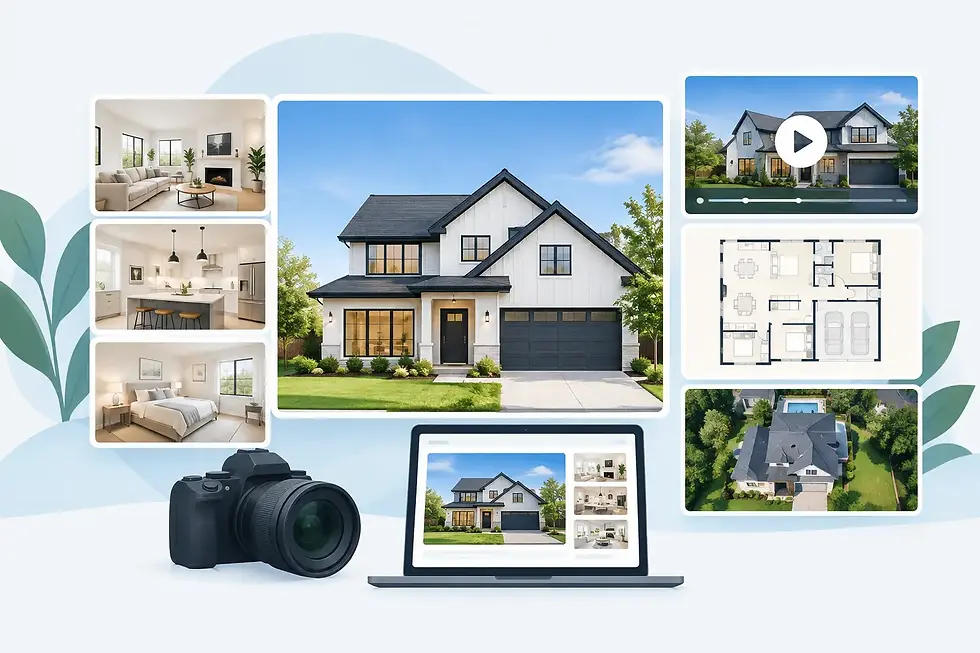
The conversation changes once the marketing package includes more than still photos. Video walkthroughs, aerial media, 3D tours, and floor plans each come with their own requirements, and they should be planned before the shoot day.
For video, the first requirement is purpose. Is the footage intended for a listing page, social reels, paid ads, or a branded agent promo? Horizontal and vertical formats serve different uses. If both are needed, that should be known in advance so the shoot is built around it rather than forced in editing later.
Drone work has an even clearer compliance layer. Aerial photo and video should be handled by an FAA-certified operator, especially when the media is being used for commercial marketing. Weather, flight restrictions, nearby airports, and property surroundings can all affect whether drone coverage is possible on a given day. If aerials are essential to the campaign, it is smart to confirm that early rather than assume every property can be flown.
3D tours and floor plans also require planning for access and readiness. Doors need to be open, lights on, and rooms fully prepared because those formats capture the whole flow of the space. They are especially useful when the property benefits from layout clarity, remote buyer interest, or leasing traffic that needs more than flat photos.
Turnaround and file delivery are part of the job
A common mistake is treating delivery speed as a bonus instead of a requirement. In real estate, timing is operational. If media arrives too late, the listing launch stalls, marketing gets pieced together in stages, and momentum is lost.
That is why dependable turnaround matters as much as the shoot itself. Agents often need next-morning photo delivery, not because they are impatient, but because the rest of the listing process is already queued up. Syndication, email blasts, open house promotion, and social scheduling all depend on having approved assets in hand.
Delivery should also be organized. Files should be easy to download, clearly labeled, and ready for actual use. If the agent has to resize everything manually, sort branded from unbranded images, or chase missing formats, the process is not efficient. Benson Productions has built its process around that reality: booking, capture, and delivery need to support fast listing workflows, not slow them down.
Matching the media package to the property
Not every listing needs the same asset mix, and that is where judgment matters. A small condo may only need strong photography, while a custom home, mixed-use property, or short-term rental may benefit from a broader package with video, aerials, 3D, and a floor plan.
The requirement is not "more media" for the sake of it. The requirement is enough media to market the property properly. If the home has a view, acreage, proximity to commercial corridors, or a layout that is hard to understand from still images alone, adding the right formats can improve clarity and engagement. If the property is straightforward, a clean photo package may be the most efficient choice.
That is also true in Southern California, where listing presentation often needs to account for outdoor living spaces, neighborhood context, and buyer expectations around lifestyle visuals. The right coverage depends on what actually sells the space.
How to avoid the most common mistakes
Most problems around real estate photography requirements come from misalignment, not equipment. The property was not ready. The deliverables were not defined. The wrong formats were shot. The files were delayed. Or the visuals looked polished but missed key spaces buyers expect to see.
The simplest fix is to set the scope before the appointment. Confirm what is being captured, how it will be used, whether the property is fully prepared, and what turnaround is needed. That removes guesswork and reduces reshoots.
It also helps to work with a media partner that understands the practical side of listing marketing. Real estate professionals do not need extra complexity. They need media that is done right, delivered fast, and ready to publish.
The best standard to use is not whether the photos look impressive in isolation. It is whether the full package helps the property go live quickly, present accurately, and compete well from the first click.


Comments