


Video Walkthrough Conversion Benefits for Listings

A buyer scrolling through listing results can compare dozens of homes before they ever call an agent. Still photos earn the click, but a well-produced video gives that buyer a reason to stay, understand the layout, and picture what it would feel like to walk through the property. That is where video walkthrough conversion benefits become measurable: more meaningful attention, stronger interest, and inquiries from people who have already engaged with the space.
For agents, property managers, and commercial marketers, video is not simply an extra deliverable. It is a practical sales asset that helps a listing communicate faster across the channels where prospects actually spend time.
Why Video Walkthroughs Improve Listing Conversion
A walkthrough answers the questions still images cannot always answer quickly. How do the rooms connect? Is the kitchen open to the living area? What does the patio look like from inside? Is the office separated from the main living space? A video gives viewers a natural sense of sequence, scale, light, and flow.
That context reduces uncertainty. A prospect who understands the property before reaching out is more likely to take the next step with a clear purpose, whether that means booking a showing, requesting leasing information, or sharing the listing with a decision-maker.
This matters because the first interaction is usually digital. Buyers and tenants are making fast judgments on a phone, often between meetings or after work. Video can present the property in a format that feels easy to consume while still delivering more detail than a single image or caption.
The result is not always more inquiries in a simple, universal sense. A property’s price, location, condition, and demand still matter. But video can improve the quality of engagement by helping viewers self-qualify before they contact the listing representative.
Video Walkthrough Conversion Benefits at Each Stage
More attention on the listing
Attention is the first conversion. If a visitor leaves after a few seconds, even great property features may never get noticed. A concise walkthrough creates momentum: viewers move from the entry to the main living areas, key upgrades, outdoor spaces, and details that distinguish the listing.
Motion also helps the listing stand apart in email campaigns, property websites, social posts, and agent presentations. A clean horizontal version works well for websites and longer-form viewing, while vertical edits can support mobile-first social media placement. Using both formats gives the same property more useful exposure without forcing an agent to create additional content from scratch.
Better understanding before the showing
A video should not replace an in-person showing. It should make the showing more productive. Prospects can arrive with a better sense of the property’s layout and a clearer idea of what they want to evaluate in person.
For occupied properties, this can be especially helpful. Agents may spend less time coordinating showings for people who expected a different floor plan, room connection, or level of finish. For sellers, that can mean fewer unnecessary disruptions. For leasing teams and property managers, it can mean inquiries that are closer to a real decision.
Stronger emotional connection
Real estate decisions are practical, but they are also visual and emotional. A still photo of a bright kitchen can show materials and finishes. A walkthrough can show how morning light moves through the room, how the kitchen relates to the dining area, and how the home transitions into the backyard.
That sense of movement helps viewers imagine daily life in the space. In commercial marketing, it can help prospects understand circulation, storefront visibility, workspace separation, loading access, or the relationship between common areas and suites. The goal is not cinematic drama for its own sake. The goal is to make the property easier to understand and remember.
More shareable marketing assets
Listings are often shared privately before an inquiry ever reaches an agent. A buyer may text a partner, a tenant may send a link to a business owner, or an investor may forward an asset to a colleague. Video makes that handoff easier because it communicates a significant amount of information in a short time.
A polished walkthrough also gives agents useful material for social media, email outreach, brokerage promotion, and property websites. Instead of relying on a series of disconnected posts, they can use a single visual asset that presents the listing with a clear beginning, middle, and end.
What Makes a Walkthrough Convert
Not every real estate video performs the same way. A long video with slow pacing, unclear room order, or distracting camera movement can create friction rather than confidence. Conversion-focused production starts with a simple question: what does a serious prospect need to see to understand the property and take the next step?
A strong walkthrough usually begins with the home’s best immediate impression, then moves through the layout in a logical order. It gives priority to the spaces that drive value, such as a renovated kitchen, primary suite, view, outdoor living area, flexible workspace, or upgraded commercial buildout. It does not need to show every closet in equal detail.
Steady movement and accurate color are equally important. Overly stylized edits can make a listing feel less trustworthy if the final product does not resemble the property in person. The best approach is polished but grounded: bright where the home is bright, clear about room relationships, and selective about the features that matter most.
Drone footage can add useful context when the setting supports it. Aerial video is valuable for showing lot size, proximity to amenities, a corner location, surrounding views, building scale, or access points. It is less useful when it is added only because aerial footage is available. Every shot should help a prospect understand the opportunity.
Match the Video to the Property and Audience
A starter condo, a luxury coastal home, a retail suite, and a short-term rental do not need the same walkthrough. The marketing objective should shape the length, pace, and shot selection.
For a residential listing, the priority may be lifestyle and flow. Show how the kitchen connects to gathering spaces, where the bedrooms sit in relation to the main living area, and what makes the exterior usable. For a commercial listing, practical details may matter more: suite layout, visibility, parking, entrances, ceiling height, or adaptable work areas.
Short-term rental operators may benefit from a faster, guest-focused edit that highlights sleeping arrangements, amenities, parking, outdoor areas, and the arrival experience. In each case, the video should help the right viewer decide whether the property fits their needs.
There is also a trade-off between speed and complexity. A straightforward walkthrough can often support a fast listing launch. A property with multiple structures, large acreage, extensive aerial coverage, or a detailed commercial campaign may require a more tailored production plan. The right choice depends on how much context the prospect needs before making contact.
Use Video as Part of a Complete Listing Package
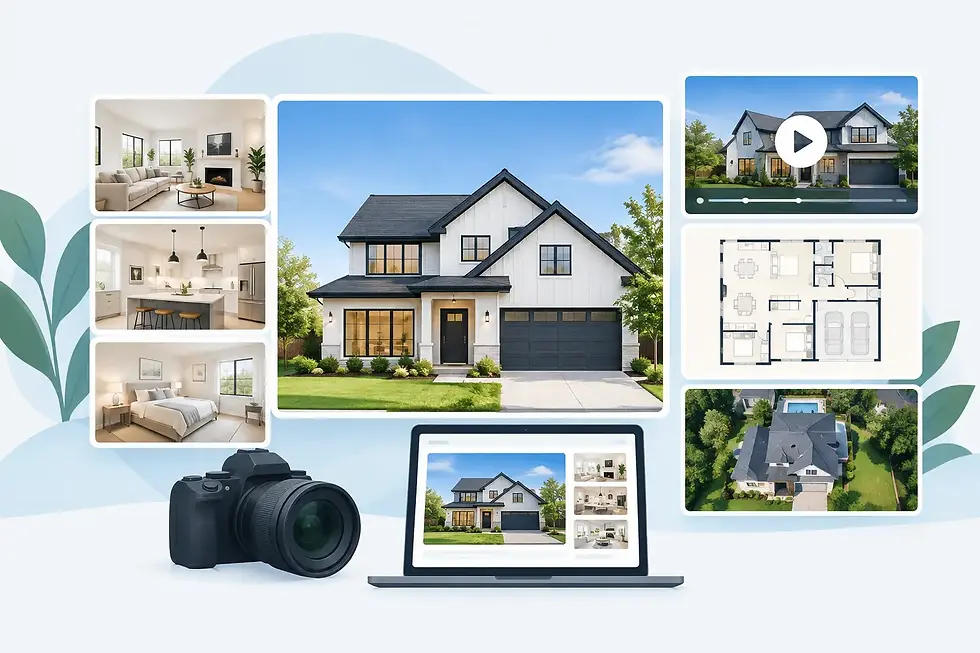
Video works best when it supports, rather than competes with, the rest of the listing media. Professional photography is still essential for MLS presentation and quick feature scanning. Floor plans provide dimension and room relationships at a glance. Interactive 3D tours give highly motivated viewers a self-directed way to explore. A property website brings the assets together in one focused destination.
Each format serves a different behavior. Photos help people browse. Floor plans help them verify. 3D tours help them inspect. Video helps them feel the flow and understand the property quickly. When these assets are delivered in a coordinated package, agents can market the listing across more channels without creating a fragmented experience.
For busy real estate professionals, operational consistency matters just as much as creative quality. A dependable process, clear deliverables, and next-morning photo delivery help listings go live without waiting on a patchwork of vendors. Benson Productions builds its media workflow around that practical need, making it easier to order listing-ready assets and keep the marketing schedule moving.
Measure the Right Signals
A walkthrough’s value should be evaluated against the action it supports. Depending on the campaign, useful signals can include time spent on the property website, video views, completion rate, direct messages, showing requests, saved listings, and the quality of conversations that follow.
Avoid judging performance by views alone. A short social clip may attract broad attention but generate little buying intent. A longer property video may receive fewer plays while helping a smaller group of serious prospects decide to book a tour. Both can be useful if they serve different stages of the funnel.
Agents can also learn from recurring questions. If prospects consistently ask about the backyard, parking, separate entrance, or room layout, those details may need more emphasis in the next video. Over time, that feedback helps create a more effective shot plan for the property types and audiences an agent serves most often.
The most useful walkthrough does not try to impress everyone. It gives the right prospect enough clarity and confidence to stop scrolling, share the listing, and take the next practical step.


Comments