


What Is Real Estate Drone Photography?
- AJ Benson
- May 29
- 6 min read

When a property has a long driveway, a corner lot, mountain views, or amenities just beyond the fence line, ground-level photos only tell part of the story. That is where the question comes up: what is real estate drone photography, and when does it actually improve a listing instead of just adding another media line item?
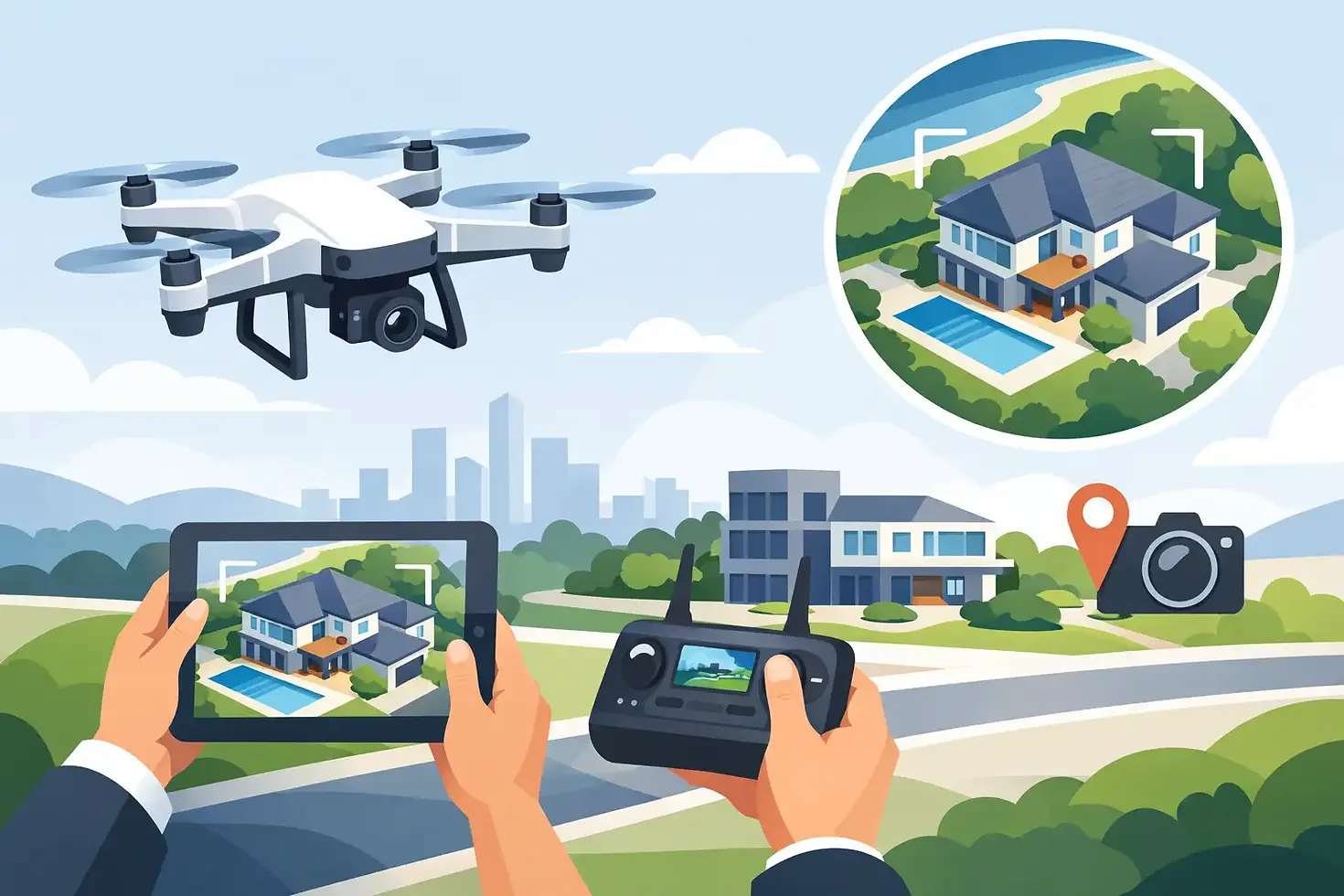
Real estate drone photography is the use of FAA-compliant drones to capture aerial photos and video of a property for marketing. In practice, it helps agents and property marketers show what buyers cannot fully understand from eye level alone - lot size, home placement, proximity to the coast, nearby retail, parking layout, surrounding streets, outdoor amenities, and the overall context of the property. For some listings, that context is a major selling point.
This is not just about getting a dramatic overhead shot. Done right, drone media is a practical sales tool. It gives buyers a faster read on the property, helps listings stand out online, and rounds out a media package with views that standard photography cannot provide.
What is real estate drone photography used for?
At the most basic level, drone photography is used to market property more clearly. Aerial images can show the footprint of a home, the relationship between structures on a lot, and exterior features like pools, guest houses, sport courts, acreage, or shared community spaces. Drone video adds movement, which is useful for showing approach, frontage, and the feel of the surrounding area.
For residential listings, that often means showing a backyard that opens to a canyon, a roof condition that looks clean and updated, or a neighborhood setting that feels more premium from above. For commercial properties, the value is often even more direct. Aerial media can show access roads, parking capacity, building layout, visibility from nearby streets, adjacent businesses, and overall site logistics in a way still photos from the ground cannot.
Short-term rental operators and property managers also use drone media to highlight outdoor appeal. If the booking decision depends on the pool area, the walkability of the location, or the setting around the property, aerial coverage can help set the right expectations before a showing or reservation inquiry.
What real estate drone photography actually includes
A typical real estate drone shoot includes a set of high-resolution aerial stills, video clips, or both. The stills usually combine straight-on elevated angles, top-down shots when useful, and wider views that show the property in context. Video may include smooth approach shots, orbit-style movement around the home, or elevated reveals that show the neighborhood, view corridor, or nearby amenities.
The best results come from planning the shoot around the property itself. A home on a standard suburban lot may only need a handful of aerial images to support the main gallery. A larger estate, commercial site, or view property may benefit from a more developed drone sequence because the setting is part of the value proposition.
That is an important distinction. Drone photography should support the listing story, not distract from it. If the aerials are impressive but do not answer buyer questions, they are less useful than a clean, well-shot exterior photo set.
Why drone photography matters in real estate
Most buyers start online, and they make fast judgments. Before they read the full description, they are already scanning for cues about layout, location, condition, and lifestyle. Drone photography works because it compresses a lot of information into one frame.
An aerial image can instantly show that a property backs to open space instead of another row of homes. It can show that a retail building sits on a high-visibility corner. It can confirm that a condo complex includes amenities worth highlighting. That kind of visual clarity can improve click-through interest because buyers feel like they understand the asset faster.
It also helps agents market with more confidence. If a listing has a feature that is hard to explain in words, aerial media can do that job quickly. Instead of trying to describe the lot shape, access point, or distance to the beach, the visuals handle it.
That said, drone photography is not equally valuable for every property. A small interior-driven condo with limited exterior character may not gain much from an aerial package. A hillside home, multifamily property, land listing, or hospitality asset usually will.
When real estate drone photography makes the biggest impact
The strongest use cases are properties where scale, setting, or access materially affect buyer interest. View homes are an obvious example. So are properties with oversized lots, detached structures, unique topography, or outdoor amenities that carry real weight in the sales process.
Commercial listings often benefit because site orientation matters. Buyers, tenants, and investors want to understand loading access, parking, traffic patterns, neighboring uses, and the building's relationship to the street. Aerials help answer those questions before anyone schedules a tour.
In Southern California, drone photography is especially useful when location is part of the pitch. Coastal proximity, hillside positioning, canyon lots, entertainment areas, and mixed-use surroundings are easier to market when the visuals show the broader setting. The same applies to short-term rental properties where guests care as much about the environment around the property as the interior itself.
What makes good drone media different from generic aerial shots
Not every aerial image helps sell a property. Good real estate drone photography is structured around marketing goals, compliance, and clean execution.
First, the framing needs to be intentional. The property should be easy to identify, and the angle should explain something useful. If the image is too wide, the home gets lost. If it is too tight, the location context disappears.
Second, timing matters. Exterior lighting can make or break aerial footage. Midday may work for clarity, but softer light often creates a more polished result. Wind conditions matter too. Even with stabilized equipment, poor weather can limit shot quality.
Third, editing should stay realistic. Buyers need accurate representation. The goal is a clean, professional look that supports the listing, not exaggerated skies or misleading property boundaries.
Finally, drone work has to be done legally. That includes FAA compliance, airspace awareness, and operating procedures that match the location. Around airports, dense neighborhoods, and busy commercial corridors, flight restrictions and approvals can affect what is possible and when. A dependable production partner plans for that upfront instead of treating drone work like a casual add-on.
Drone photos vs. standard real estate photos
Standard photography is still the foundation of a listing. It shows rooms, finishes, flow, and curb appeal at buyer eye level. Drone photography adds the missing overhead perspective.
The two formats work best together. Ground photos sell the lived-in experience of the space. Drone images sell the property's position, surroundings, and scale. If you rely only on aerials, buyers will not understand the interiors. If you rely only on standard photography, they may miss the bigger picture.
Video follows the same logic. Interior walkthrough footage helps people understand layout. Drone video adds context and can make the opening or closing sequence of a listing video much stronger. Used together, the package feels more complete and more intentional.
Is real estate drone photography worth it?
Usually, yes - when the property has something to show from above.
If the lot, setting, views, access, or exterior improvements play a real role in buyer interest, drone media is often worth including. It can make the online presentation stronger, reduce confusion, and help the listing feel more competitive.
If the property is in a dense area with limited exterior distinction, the value may be lower. In those cases, budget is often better spent on strong standard photography, video, or a 3D tour. The right decision depends on what will actually move the listing forward.
For busy agents, the practical question is not whether drone media looks impressive. It is whether it helps market the property more clearly and gets delivered without slowing down launch. That is why consistency matters. When aerial coverage is part of a streamlined media process, it becomes easier to use strategically instead of treating it as a luxury add-on.
What is real estate drone photography really buying you?
It is buying perspective. Not just a higher camera angle, but a clearer way to present the property.
For the right listing, drone photography shows what buyers need to understand early: how the property sits, what surrounds it, and why the location matters. It can strengthen photos, sharpen video, and make the marketing package feel complete from the start.
The best use of drone media is simple - use it when it helps the property make sense faster. That is usually what gets attention, drives better listing engagement, and helps you go to market with fewer gaps to explain later.


Comments