


Real Estate Media Trends 2026 That Win Listings

A listing can lose momentum before the first showing is scheduled. Buyers and tenants often make their first decision while scrolling on a phone, comparing several properties in minutes. That is why real estate media trends 2026 are less about chasing visual gimmicks and more about delivering a complete, credible property experience quickly.
For agents, brokerages, property managers, and leasing teams, the shift is operational as much as creative. The strongest marketing package is no longer a gallery of good photos sent days after the shoot. It is a coordinated set of listing-ready assets that works across the MLS, property website, social media, email, and paid campaigns without creating more work for the person trying to get the property live.
Real Estate Media Trends 2026: Complete Beats Complicated
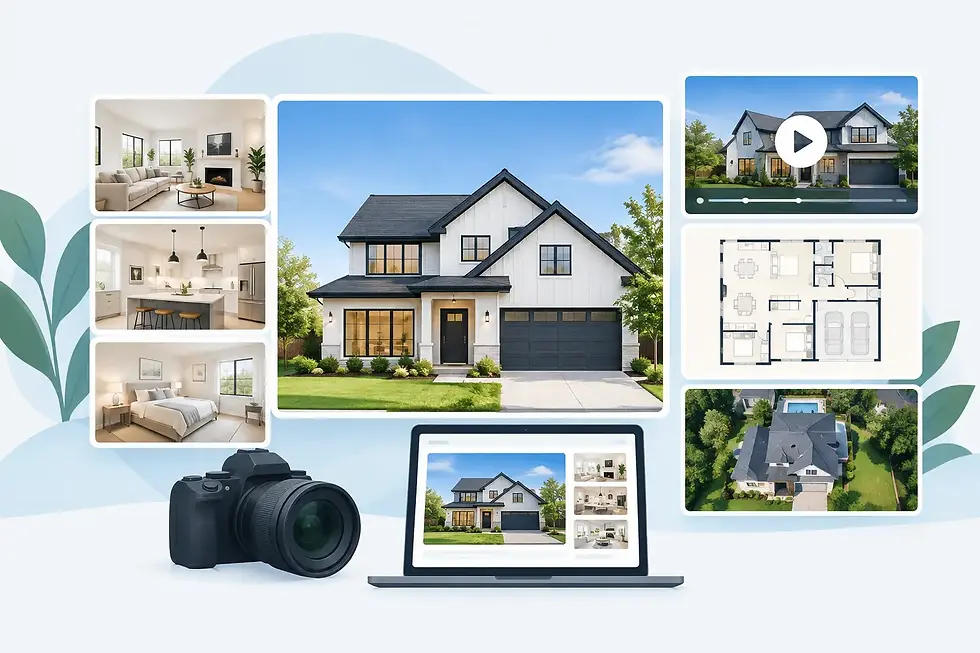
Buyers expect to understand a property before they commit time to visiting it. High-quality photos remain the foundation, but they are most effective when supported by video, floor plans, and an immersive tour where the property warrants it. Each format answers a different question.
Photos establish appeal. Video creates flow and feeling. Floor plans help people understand layout and scale. A 3D tour gives remote or time-constrained prospects a way to explore at their own pace. When these assets are built as one package rather than ordered as disconnected add-ons, the listing feels more complete and the marketing process moves faster.
This does not mean every listing needs every format. A compact rental may need strong photography, a floor plan, and a short vertical video more than a long cinematic walkthrough. A luxury home, commercial suite, or property with distinctive architecture may benefit from the full package. The right choice depends on the property, the audience, and the channels being used to promote it.
The trend is not excess. It is intentional coverage.
Fast Delivery Is Now Part of the Product
Speed has always mattered in real estate, but the standard has tightened. Agents are preparing launch emails, social posts, open-house promotions, and MLS entries on compressed timelines. Media that arrives late can delay the whole campaign, even when the visuals are excellent.
Next-morning photo delivery is becoming a practical advantage because it lets agents keep control of the listing timeline. A shoot completed today can support a listing launch tomorrow, while the property is still clean, staged, and ready for attention. Quick delivery also reduces the back-and-forth that happens when marketing materials are scattered across different vendors and deadlines.
Speed should not come at the cost of consistency. Images still need accurate color, clean vertical lines, balanced window exposure, and a polished but realistic presentation. The goal is not to make a property look artificial. It is to show its best features clearly enough that a prospect arrives with the right expectations.
For teams handling recurring inventory, dependable turnaround can be more valuable than occasional creative flourishes. Consistent quality makes it easier to set a repeatable listing workflow and gives every property a professional starting point.
Vertical Video Moves From Extra to Essential
Horizontal walkthrough video still has a place on property websites, YouTube, email campaigns, and presentation screens. But vertical video is where many listings now earn their first few seconds of attention. Short-form, mobile-first clips fit the way buyers, renters, and investors browse social feeds.
The most effective vertical videos are not simply a horizontal edit cropped to fit a phone. They are planned for a vertical frame. The opening should show a compelling feature quickly, such as curb appeal, a view, a kitchen detail, a pool, or a well-designed primary suite. Captions and on-screen text can help when viewers watch without sound, but they should support the property rather than cover it.
For 2026, expect agents to use one property shoot to create both a polished horizontal walkthrough and several short vertical assets. That approach keeps the visual style consistent while giving the marketing team more usable content. It also makes it easier to promote a listing more than once instead of relying on a single launch post.
Floor Plans Are Becoming a Basic Buyer Tool
A floor plan does not replace photography. It makes photography more useful. When prospects can see how rooms connect, where bedrooms sit relative to living areas, or how a commercial space is configured, they can qualify the property more effectively before reaching out.
This is especially useful for homes with unusual layouts, multi-level properties, ADUs, office suites, retail spaces, and rentals where square footage alone does not explain usability. A clear floor plan can reduce uncertainty and help attract inquiries from people who have already spent time understanding the space.
For agents, including a floor plan also creates a more complete property website and presentation package without asking buyers to piece together the layout from photos alone. It is a straightforward asset, but it solves a real decision-making problem.
3D Tours Need a Clear Purpose
Interactive 3D tours continue to be valuable, particularly for vacant homes, higher-priced listings, short-term rentals, new construction, and commercial properties. They give remote prospects a self-guided experience and can help decision-makers revisit a space after an initial conversation.
Still, a 3D tour is not automatically the right tool for every property. It requires a clean, well-prepared space and performs best when the layout, scale, or access limitations make exploration especially valuable. For a fast-moving entry-level listing with broad local demand, professional photos and a floor plan may provide better return with less production time.
The key is to use immersive media where it helps the prospect make a more confident decision. A tour should reduce friction, not become another asset that goes unused after launch.
Drone Media Is More Selective and More Strategic
Aerial media remains one of the clearest ways to show land, lot position, nearby amenities, access roads, views, and a property’s relationship to its surroundings. In Southern California, where location can be a major part of the value story, drone photos and video can make a difference for hillside homes, coastal properties, large lots, equestrian sites, multifamily buildings, and commercial assets.
The strongest drone work is purposeful. It shows what cannot be explained from the ground. Aerial footage that establishes proximity to a beach, trail, freeway access, business district, or large outdoor area can answer questions quickly. Random flyovers may look impressive, but they do not always improve the listing.
Compliance also matters. Agents should work with FAA-certified operators who understand airspace restrictions, safe flight practices, and the local conditions that can affect a shoot. The value of aerial media depends on getting the footage done right, not merely getting a drone in the air.
AI Will Assist Production, Not Replace Property Truth
AI tools are increasingly helping real estate teams organize marketing, draft captions, create campaign variations, and speed up routine production tasks. Used well, those tools can reduce administrative work and help agents distribute listing content more consistently.
But property media needs a clear line: marketing should represent the actual property. Overly altered skies, virtual changes that are not disclosed, distorted room proportions, or misleading enhancements can create disappointment at a showing and weaken trust. Efficiency is useful. Misrepresentation is not.
The practical role for AI in 2026 is support. It can help teams repurpose approved media into different formats, prepare copy variations, and maintain a publishing calendar. The photos, video, floor plans, and drone assets still need professional capture, careful editing, and quality control.
Distribution Planning Starts Before the Shoot
One of the most useful real estate media trends 2026 is a change in timing. Agents are thinking about where the assets will go before production begins. That affects what should be captured, how video should be framed, and which details deserve coverage.
A listing headed for the MLS needs clean, accurate images that meet platform expectations. A social-first campaign needs vertical clips and strong opening visuals. A commercial campaign may need exterior context, access points, suite flow, and floor-plan clarity. A short-term rental needs to communicate amenities, sleep arrangements, and the experience of staying there.
When the media plan matches the distribution plan, fewer assets go to waste. The agent receives a package built for actual use rather than a folder of files that requires more editing, resizing, and coordination.
For busy real estate professionals, the winning approach is simple: choose media that helps the right prospect understand the property, and choose a production partner that can deliver it without slowing down the launch. A clean, complete package delivered on schedule gives every listing a better chance to make its first impression count.


Comments