


3D Tours vs Virtual Staging: Which Works Better?

A vacant living room can look larger in person than it does in a listing photo. An occupied home can have the opposite problem: buyers may struggle to see past furniture, decor, or a seller's personal style. That is why the choice between 3d tours vs virtual staging matters. Both improve online presentation, but they solve different marketing problems.
For agents working on a fast listing timeline, the best option is not the newest-looking feature. It is the one that helps buyers understand the property, supports an accurate listing presentation, and gets the home to market without unnecessary delays.
3D Tours vs Virtual Staging: The Core Difference
A 3D tour is an interactive digital walkthrough of the actual property. Buyers can move room to room, look around at their own pace, and get a clearer sense of layout, flow, and room relationships before scheduling a showing. It is especially useful when a buyer is relocating, comparing several homes, or trying to qualify a property before investing time in a visit.
Virtual staging changes selected listing photos by adding digital furniture, decor, and design elements. It helps a buyer picture how an empty room could function as a bedroom, office, dining area, or living space. Rather than documenting the property in motion, it provides a polished visual answer to a common question: What would I do with this room?
The distinction is simple. A 3D tour helps buyers explore the space that exists. Virtual staging helps them imagine how that space could be used. One is interactive and layout-driven; the other is photo-based and presentation-driven.
When a 3D Tour Is the Better Listing Tool
A 3D tour earns its place when physical flow is a major selling point. Think of a home with an open kitchen and family room, a multi-level floor plan, a guest suite, an unusual layout, or outdoor areas that connect directly to the interior. Still photos can show individual rooms well, but they cannot always explain how those rooms work together.
Tours can also reduce unproductive showings. A buyer who has already walked through the property online usually arrives with a more realistic understanding of its size, configuration, and condition. That does not replace an in-person visit, but it can help agents spend time with more qualified prospects.
For occupied properties, a tour is often the most straightforward option because it captures what is actually present at the time of the shoot. The home should still be cleaned, decluttered, and prepared carefully. A 3D tour makes details easy to inspect, including distracting ones. It rewards preparation just as much as professional photography does.
There are trade-offs. A tour cannot make an empty home feel furnished, and it should not be expected to hide a room's limitations. If a small secondary bedroom or narrow dining area is likely to prompt questions, buyers will see that in the tour. In many cases, that transparency is a benefit. It sets expectations early and makes the eventual showing more productive.
When Virtual Staging Makes More Sense
Virtual staging is most effective in vacant homes where empty rooms feel flat, difficult to scale, or hard to assign a purpose. A wide-angle photo of an unfurnished great room may be technically accurate, yet buyers may not immediately recognize where a sofa, dining table, or work area would fit. Strategic virtual furniture can make the room easier to understand without changing its structure.
It can also help with flexible spaces. A bonus room can be shown as an office, a fitness room, or a playroom, depending on the likely buyer. A formal dining room that may otherwise read as unused can look intentional and inviting. The goal is not to overdecorate the image. It is to give the buyer useful visual context.
Virtual staging is a strong fit when the listing needs a quick visual lift but does not require a fully interactive experience. It works well for hero images on the MLS, property websites, email campaigns, and social posts, where a single compelling photo has to earn attention quickly.
The key is accuracy. Digitally staged images should preserve the real room dimensions, windows, fixtures, flooring, and architectural features. They should also be disclosed according to applicable MLS rules and local requirements. Buyers should never arrive expecting a renovated room, included furnishings, or a view that does not exist.
Buyer Behavior Should Guide the Decision
The right choice often comes down to what buyers need to understand before they book a showing. If the likely question is, “How does this home flow?” a 3D tour is usually more valuable. If the likely question is, “What can I do with this empty space?” virtual staging may have a stronger impact.
Consider a vacant condominium with a compact living area. Virtual staging can show a realistic furniture arrangement and help buyers see that the room is usable. Add a 3D tour if the unit has an unusual hallway, split-bedroom layout, or a view relationship that photos alone cannot explain.
Now consider a larger family home with several levels, a covered patio, and a detached office. The challenge is not necessarily furnishing the rooms. It is helping buyers understand how much usable space exists and how the property connects. A 3D tour may do more work than staged photos in that scenario.
For higher-interest listings, using both can be the practical answer. The staged photos create a strong first impression, while the tour gives serious buyers the detail they need to stay engaged. The assets have different jobs, so combining them is not redundant when each solves a real presentation problem.
Build the Right Media Package, Not the Biggest One
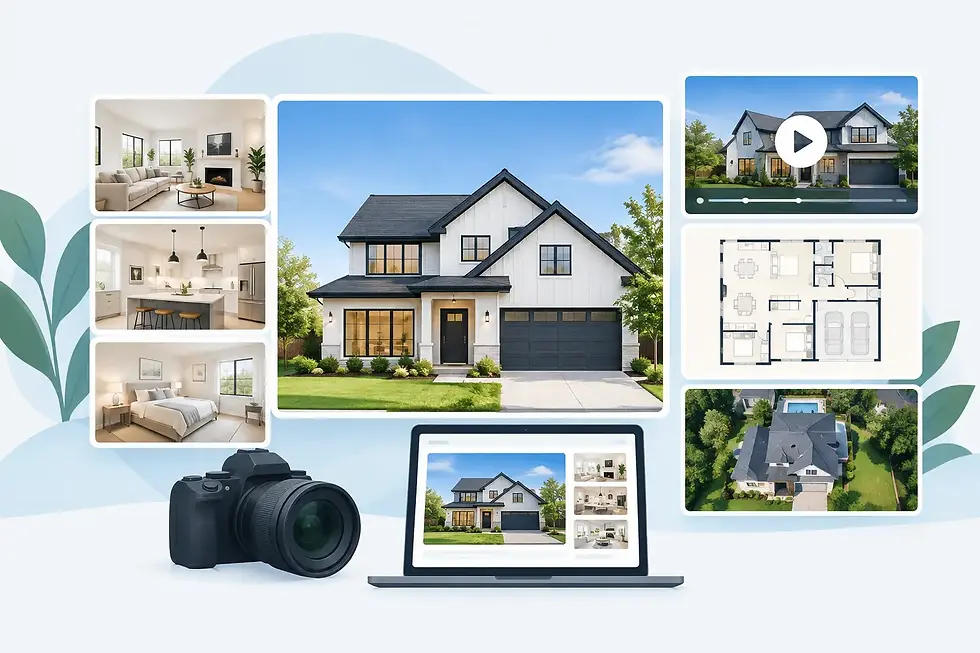
Real estate media should match the property, campaign, and timeline. A complete package might include professional photos, a 3D tour, floor plan, cinematic video, drone coverage, and a property website. But not every listing needs every deliverable to market effectively.
Start with the listing's strongest story. Is it the view, location, renovation, lot, layout, lifestyle, or investment potential? Then identify the biggest online obstacle. For a vacant property, that obstacle may be a lack of warmth. For a large or distinctive home, it may be buyer confusion about the floor plan. Choose the media that addresses the obstacle first.
This approach also keeps the production workflow efficient. Virtual staging requires final photo selections and clear direction on which rooms need treatment. A 3D tour requires access to a property that is fully ready to be documented from every angle. Scheduling the right services together helps avoid reshoots, rushed preparation, and delayed launch dates.
Preparation Still Drives Results
Neither option can compensate for a property that is not ready to be shown. Before a 3D tour, clear counters, remove temporary storage, turn on lights, open window coverings where appropriate, and make sure all accessible rooms are presentation-ready. The camera will document the whole experience, not only the best angles.
Before virtual staging, make sure the base photography is clean and well composed. Remove clutter, visible cords, personal items, and anything that could interfere with a believable final image. Digital furniture looks most convincing when the room itself is already in good condition.
For Southern California listings, this preparation should extend outdoors. Patios, balconies, pool areas, views, and indoor-outdoor transitions can influence buyer interest as much as an interior living room. If those spaces are central to the listing story, make sure the selected media shows how they function, not just how they look.
A Practical Way to Choose
Use a 3D tour when layout, scale, room flow, or remote buyer access will influence the decision. Use virtual staging when a vacant or underused room needs visual purpose and a stronger photo presentation. Use both when the property needs to make a memorable first impression and answer detailed buyer questions before the showing.
Also consider the likely marketing lifespan of the listing. A property expected to attract relocation buyers or out-of-area investors may benefit more from an interactive tour. A straightforward vacant listing that needs to go live quickly may gain more from a few thoughtfully staged images. There is no automatic winner, only a better fit for the property.
Benson Productions helps agents build listing-ready media around what buyers need to see, with a process designed to keep production clear and delivery moving. Choose the tool that makes the next buyer action easier, whether that is lingering on a photo, exploring a floor plan, or booking a showing with confidence.


Comments